
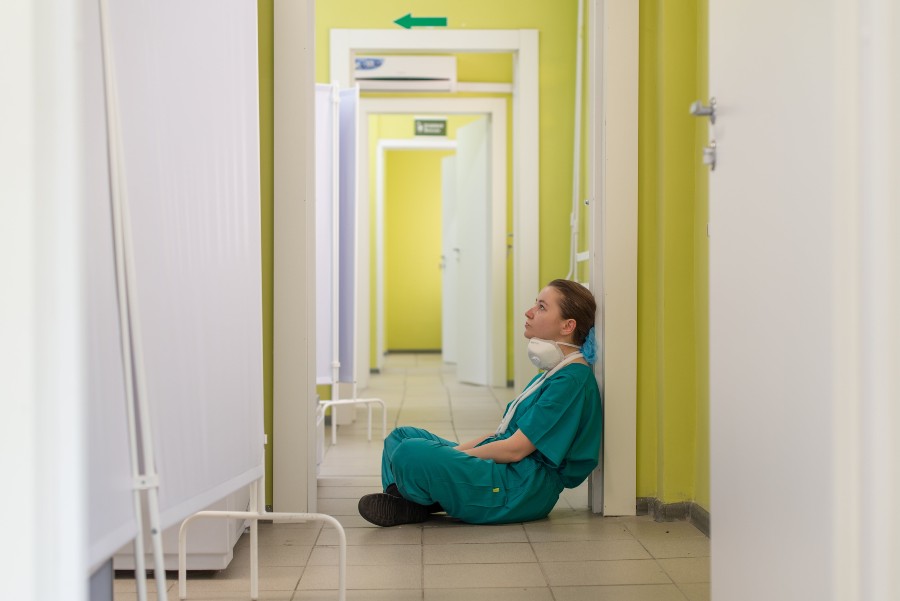
When you visit a hospital or medical facility for injuries or illness, you trust you’ll be in good hands with the medical professionals.
If you’re hospitalized, you’ll likely interact with nurses the most. A doctor will visit once or twice a day, but your main point of contact will be the nursing staff.
While most nurses treat patients to the best of their abilities, some are negligent.
An example of malpractice in nursing is administering the wrong medication, leading to patient harm. Other examples include failing to monitor vital signs, neglecting wound care, and not following physician orders. These actions can cause severe complications like infections, falls, pressure ulcers, or death.
When a patient is the victim of medical negligence, they might hire a nursing malpractice lawyer.
Read on for malpractice in nursing examples and why you should hire a medical malpractice attorney.
If you have questions, please contact the nursing malpractice attorneys at Poulos & Cavazos today. You can also call us at 575-523-4444.
Key Takeaways
- Nurses must adhere to strict protocols when administering medications—errors like wrong dosage or wrong drug can signal serious professional negligence.
- Failing to monitor patients’ vital signs or condition changes can allow complications to escalate—making ongoing observation a critical factor in patient safety.
- Incomplete or inaccurate documentation of a patient’s history, treatment or condition can undermine future care decisions and reflect substandard record keeping.
- When a nurse omits or delays necessary treatment—despite clear need—it may constitute a breach of the standard of care and form the basis of a malpractice claim.
What Is Malpractice in Nursing?
Nursing malpractice, in the context of healthcare, refers to situations where a nurse deviates from the standard of care expected from a competent nurse in the same circumstances, resulting in harm or injury to the patient. It’s important to note that not every error or lapse in judgment constitutes malpractice; it is only considered malpractice when it leads to patient harm.
So, medical malpractice may be present if the nurse didn’t provide appropriate care and these actions led to the victim’s condition worsening or death. All medical professionals must adhere to a standard level of care, not only doctors.
If professionals with similar experience and training had taken the same course of action, it might not be malpractice. However, if the nurse’s actions fell below the standard of care, they might be guilty of negligence.
See what our clients have to say about our services:
Medical Negligence vs Medical Malpractice in Nursing
Identifying whether a case involves medical negligence or malpractice hinges on closely examining various aspects. Occasionally, a situation may fall under both categories, involving considerations such as:
- What events preceded the error?
- The extent of the nurse’s understanding of potential outcomes prior to their actions.
- Adherence to or disregard of established protocols.
- The nurse’s commitment to delivering optimal medical care.
In the context of nursing, malpractice encompasses various instances of substandard care.
Examples of Malpractice in Nursing
Examples of malpractice in nursing include:
- Medication Administration Failures: When a nurse improperly administers medication, leading to harm or complications for the patient.
- Botched Treatment: Instances where treatment procedures are carried out incorrectly, resulting in adverse outcomes.
- Failure to Provide Treatment: Neglecting to provide necessary medical care to patients, which can lead to worsening conditions.
- Failure to Monitor: Not adequately monitoring patients’ vital signs or condition changes, potentially causing harm.
- Failure to Accurately Update Patient Records: Inaccurate or incomplete documentation of a patient’s medical history and treatment, which can affect future care decisions.
These are specific examples that illustrate what constitutes malpractice in nursing.
Negligence in nursing is very similar to medical malpractice in some respects. Before collecting any compensation, you must show that the nurse was responsible for your injuries.
Nursing negligence may occur when a nurse, during a routine blood draw, accidentally damages a patient’s blood vessel, resulting in an injury. This can be considered a case of negligence. On the other hand, medical malpractice involves a nurse deviating from established protocols, often for the sake of saving time, and causing an injury during a medical procedure. This is a clear instance of medical malpractice.
Ready For Your No-Charge Consultation?
Establishing a Malpractice Claim in New Mexico
To establish a nurse is liable for your injuries, you must demonstrate four key factors:
- The nurse owed you some type of legal obligation as a patient,
- Evidence of how the nurse breached this legal obligation,
- The breach was responsible for your injuries, and
- You have documentation of damages you sustained due to the nurse’s negligence.
While establishing nursing negligence sounds simple, it’s often far more complicated. New Mexico is a pure comparative negligence state, which means you don’t have to prove the defendants were 100% negligent.
You can be partially at fault for your own injuries and still collect a portion of your compensation. That’s one of the many reasons you should consider hiring the New Mexico nursing malpractice lawyers at Poulos & Cavazos.
Common Nursing Malpractice FAQs for Las Cruces, NM
1. What counts as nursing malpractice in Las Cruces, NM?
2. What are the most common examples of nursing malpractice?
3. Can I sue a nurse or hospital for malpractice in nursing?
4. Do nursing errors count as medical malpractice?
5. What evidence is needed for a nursing malpractice claim?
6. Are medication errors by nurses considered malpractice?
7. Can I sue if a nurse failed to monitor my loved one properly?
8. What if nursing negligence happened in a Las Cruces hospital or nursing home?
9. How do I know if I have a valid nursing malpractice case?
10. How do I get a free case evaluation for nursing malpractice?
New Mexico Statute of Limitations
You have limited time to bring a lawsuit in New Mexico. In most instances, you only have three years from the date of malpractice to file a lawsuit.
However, some exceptions could reduce or extend the amount of filing time. Determining the proper statute of limitations is tricky. Don’t risk jeopardizing your potential compensation by trying to represent yourself in a nursing malpractice lawsuit.
Contact Our New Mexico Nursing Malpractice Lawyers
If you or someone you love is the victim of malpractice in nursing, contact the medical malpractice attorneys at Poulos & Cavazos today. You can also call us at 575-523-4444
We specialize in medical malpractice cases and have the expertise to help you build a strong case against the defendants. Schedule an initial consultation to learn more about how we can assist you.
Directions to Our Las Cruces Office

Victor Poulos, JD
For more than two decades, Victor Poulos has devoted his practice exclusively to representing patients and families harmed by medical negligence. He has handled complex medical malpractice cases involving hospitals, surgeons, anesthesiologists, and other healthcare providers, and has taken hundreds of depositions of physicians, nurses, and hospital staff across nearly every medical specialty. Mr. Poulos has successfully tried high-stakes malpractice cases to verdict and is known for his meticulous case preparation and relentless advocacy on behalf of injured patients.
Rate this Post

 Loading...